
"𝔒" U+1D512 Mathematical Fraktur Capital O

Unicode Data
The Unicode character U+1D512, displayed as 𝔒 and named "Mathematical Fraktur Capital O" is located in the Mathematical Alphanumeric Symbols block. This character was introduced in Unicode version 3.1 (2001). Find its HTML entities, UTF-8/UTF-16 encodings, hex values, and copy-paste details below.
- Name:
- Mathematical Fraktur Capital O
- Category:
- Uppercase Letter
- Block:
- Mathematical Alphanumeric Symbols
- Script:
- Common
- Decomposition:
- [font] O (U+004F)
- Bidirectional:
- Left-to-Right
- Mirrored:
- No
- Unicode Version:
- Unicode 3.1
Character Encodings
- HTML Entity - Named:
𝔒- HTML Entity - Decimal:
-
𝔒 - HTML Entity - Hex:
-
𝔒 - Unicode:
-
U+1D512; - Decimal:
-
120082 - CSS:
-
\01D512 - Javascript:
-
\u1D512 - Perl:
-
\x{1D512} - Ruby:
-
\u{1D512} - Python:
-
u'\u1D512' - UTF-8 Encoding:
-
E1B59132 - UTF-16 Encoding:
-
1D510032 - UTF-32 Encoding:
-
00001D5100000032
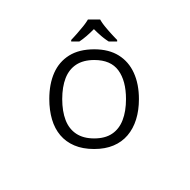
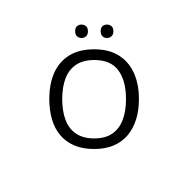
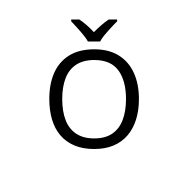
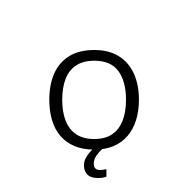
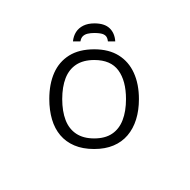
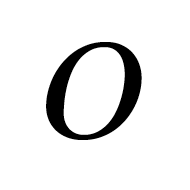
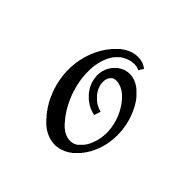
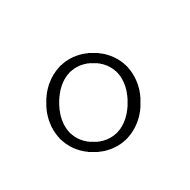
Other Characters Based on - O (U+004F)












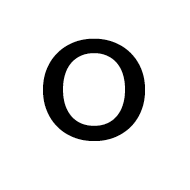


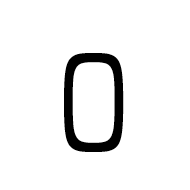


Complete Record for Codepoint U+1D512
Every Unicode-defined property for this character, as specified in the Unicode Character Database. Tap the icon next to a property to learn what it represents.
What is this?
The codepoint written in hexadecimal, as used in the standard U+XXXX notation.
What is this?
Whether this character is one of the plain ASCII characters used to write hexadecimal numbers (0-9, A-F, a-f).
What is this?
Whether this character is considered a letter.
What is this?
Whether this character is one of the small set of invisible codes used to control bidirectional text layout.
What is this?
Whether this character's glyph should be flipped horizontally when displayed in right-to-left text.
What is this?
Whether this character is deliberately excluded from being produced by Unicode normalization.
What is this?
Whether this character is skipped over when software decides whether nearby letters should be treated as uppercase or lowercase.
What is this?
Whether casefolding (used for case-insensitive comparison) changes this character.
What is this?
Whether any form of case mapping changes this character.
What is this?
Whether this character changes when both compatibility normalization and casefolding are applied together.
What is this?
Whether converting this character to lowercase actually changes it.
What is this?
Whether converting this character to titlecase actually changes it.
What is this?
Whether converting this character to uppercase actually changes it.
What is this?
Whether this character has a case at all (uppercase, lowercase, or titlecase).
What is this?
Whether this character is excluded from being produced by any form of Unicode normalization, including indirectly.
What is this?
Whether this character should typically be invisible and have no effect on layout when a program doesn't specifically support it.
What is this?
Whether this character is classified as a dash or hyphen-like punctuation mark.
What is this?
Whether the Unicode Standard discourages using this character in new text.
What is this?
Whether this character is a diacritical mark that modifies the meaning or sound of a neighboring character.
What is this?
Whether this emoji character can accept a modifier, such as a skin-tone marker.
What is this?
Whether this character is used as a building block inside a multi-part emoji sequence.
What is this?
Whether this character can modify a preceding emoji, such as a skin-tone marker.
What is this?
Whether this character displays as a colorful emoji by default, rather than as plain text.
What is this?
Whether this character is recognized as an emoji.
What is this?
Whether this character extends or repeats the value or shape of the preceding character.
What is this?
Whether this character is treated as a pictograph for text-segmentation purposes, whether or not it has an emoji presentation.
What is this?
The category used by text-processing software to decide where one user-perceived character ends and another begins.
What is this?
Whether this character can act as the base of a grapheme cluster — a unit of text a user perceives as a single character.
What is this?
Whether this character extends a grapheme cluster rather than starting a new one, as combining marks do.
What is this?
Whether this character is used to write hexadecimal numbers (0-9, A-F, a-f, and their fullwidth forms).
What is this?
Whether this character is allowed to appear after the first character of a programming-language identifier (like a variable name).
What is this?
Whether this character is allowed to start a programming-language identifier (like a variable name).
What is this?
Whether this character combines two ideographs in an Ideographic Description Sequence.
What is this?
Whether this character combines three ideographs in an Ideographic Description Sequence.
What is this?
Whether this character modifies a single ideograph in an Ideographic Description Sequence.
What is this?
Mathematical identifier property allowing specific math symbols to continue inside an identifier.
What is this?
Mathematical identifier property allowing specific math symbols to serve as the starting character of an identifier.
What is this?
Whether this character is classified as an ideograph, such as the CJK characters used in Chinese, Japanese, and Korean.
What is this?
Property used in grapheme cluster boundary determination for Indic scripts (e.g., Consonant, Linker, Extender).
What is this?
Where this character is positioned relative to a base consonant in Indic and related scripts (e.g. above, below, left, or right).
What is this?
The role this character plays within a syllable in Indic and related scripts (e.g. consonant, vowel sign, or virama).
What is this?
Format control characters used to explicitly manipulate cursive joining behaviors, such as ZWNJ and ZWJ.
What is this?
Marks a small group of Thai and Lao vowel characters that are typed before the consonant they belong to, out of visual order.
What is this?
Whether this character is a lowercase letter.
What is this?
Binary property indicating whether a character is a combining mark that functions as a modifier.
What is this?
Whether this character is classified as a mathematical symbol.
What is this?
Whether this codepoint is permanently reserved as a noncharacter and will never be assigned to an actual character.
What is this?
A fast hint for whether this character is already valid in Normalization Form C, without needing a full check.
What is this?
A fast hint for whether this character is already valid in Normalization Form D, without needing a full check.
What is this?
Mapping used to transform a character under NFKC (Compatibility Decomposition) followed by Full Case Folding.
What is this?
A fast hint for whether this character is already valid in Normalization Form KC, without needing a full check.
What is this?
Mapping used to transform a character under NFKC (Compatibility Decomposition) followed by Simple Case Folding.
What is this?
A fast hint for whether this character is already valid in Normalization Form KD, without needing a full check.
What is this?
Characters treated as alphabetic (letters) in algorithms, but not categorized under standard Letter categories (L) or Letter Numbers (Nl).
What is this?
Characters recommended to be ignored by default in display (such as format controls), not covered by standard ignorable categories.
What is this?
Characters used as grapheme cluster extenders, excluding standard Nonspacing Marks (Mn) and Enclosing Marks (Me).
What is this?
Characters that are allowed in the body of an identifier for backward compatibility, despite not meeting standard identifier rules.
What is this?
Characters that are allowed at the start of an identifier for backward compatibility, despite not being letters or currency symbols.
What is this?
Characters that are treated as lowercase in Unicode operations, but do not have the General Category value of Ll (Letter, lowercase).
What is this?
Characters used as mathematical symbols, but not designated with the General Category Sm (Symbol, math).
What is this?
Characters that are treated as uppercase in Unicode operations, but do not have the General Category value of Lu (Letter, uppercase).
What is this?
Whether this character is a mark that attaches to the following character, such as certain currency or exception signs.
What is this?
Is a binary Unicode property used to mark characters that have special meaning in pattern languages (like regular expressions, IDNA processing, and other parsing systems)
What is this?
It explicitly defines a small, stable set of characters that computer languages, lexers (like Rust), and regular expression engines treat as syntax-separating whitespace.
What is this?
Whether this character is used to quote or mark off speech and titles, such as a quotation mark or guillemet.
What is this?
Whether this character is one of the 26 letters used in pairs to represent country flags (e.g. in flag emoji).
What is this?
Whether this character is used as a CJK radical or postfix component in describing the structure of ideographs.
What is this?
The category used by text-processing software to decide where one sentence ends and another begins.
What is this?
Whether this character has a dot that disappears when an accent is placed on top of it, like the dot on a lowercase i or j.
What is this?
Whether this character can mark the end of a sentence, like a period or question mark.
What is this?
Whether this character is punctuation that typically marks the end of a sentence or phrase.
What is this?
Whether this character is one of the unified CJK ideographs, as opposed to a compatibility or radical variant.
What is this?
Whether this character is an uppercase letter.
What is this?
Whether this character is used to select a specific visual variant of the preceding character.
What is this?
The category used by text-processing software to decide where one word ends and another begins.
What is this?
Whether this character is treated as a space, tab, line break, or other blank separator.
What is this?
A refined version of ID Continue that guarantees identifiers stay stable and well-formed after Unicode normalization.
What is this?
A refined version of ID Start that guarantees identifiers stay stable and well-formed after Unicode normalization.
What is this?
The version of the Unicode Standard in which this codepoint was first assigned.
What is this?
How this character behaves in bidirectional text, which mixes left-to-right and right-to-left scripts.
What is this?
The named range of codepoints this character belongs to, grouping related characters together.
What is this?
The codepoint of the bracket that pairs with this one.
What is this?
Whether this character is an opening or closing bracket for the purpose of bidirectional bracket handling.
What is this?
A number used to decide the correct stacking order of combining marks (like accents) around a base character. Most numbers in the 10–133 range are just reordering slots (mainly for Hebrew and Arabic) without individual names.
What is this?
Maps characters to a common canonical form to enable language-neutral, case-insensitive string comparison.
What is this?
The sequence of codepoints this character decomposes into, if any.
What is this?
Describes how this character can be broken down into other characters, e.g. as a canonical equivalent or a compatibility variant.
What is this?
How wide this character is typically rendered in East Asian fixed-width fonts and terminals.
What is this?
The broad classification of the character, such as letter, digit, punctuation, symbol, or control.
What is this?
The role this character plays in forming a Korean Hangul syllable block, such as a leading, vowel, or trailing component.
What is this?
Which family of letterforms this character joins with when written in a cursive script such as Arabic.
What is this?
How this character connects to the characters next to it in a cursive script such as Arabic.
What is this?
The category used to decide whether a line of text is allowed to wrap before or after this character.
What is this?
The lowercase equivalent of this character, when it maps to exactly one other character.
What is this?
The official, unique name given to this character by the Unicode Standard.
What is this?
Whether this character has a numeric meaning, and if so, what kind (e.g. a decimal digit or a fraction).
What is this?
The numeric value this character represents, if it has one.
What is this?
The primary writing system this character is used in.
What is this?
A single-character case-folded form of this character, used for case-insensitive comparisons.
What is this?
Other writing systems that also use this character, beyond its primary script.
What is this?
The lowercase equivalent of this character, when it maps to exactly one other character.
What is this?
The titlecase form of this character, when it maps to exactly one other character.
What is this?
The uppercase equivalent of this character, when it maps to exactly one other character.
What is this?
The titlecase form of this character, when it maps to exactly one other character.
What is this?
The uppercase equivalent of this character, when it maps to exactly one other character.
What is this?
The default orientation of this character when text is set vertically.